Blog

  • Latte Art

    Slowly, but steadily I am getting a little better at latte art. Once I’ll figure it out completely, I’ll make a couple of videos and write a how-to article. Meanwhile, head over to youtube and look at some of the videos that they have of rosetta pours. Neat, eh?

  • Bionic Social Networking

    The words bionic and cybernetic kind of lost their original meanings in the English language. I squarely blame The Six Million Dollar Man, The Bionic Woman, and The Bionic Boy and the rest of TV and movie cyborgs as well as William Gibson.

    Cybernetics is the science of control and communication. That does not only include electronic communications and numeric control. All kinds of control and communication. Thus we are all technically cyborgs or cybernetic organisms. Cyber- was a hot bizz-prefix in the 50s and 60s, but today steadily deteriorated into something anachronistic. People say “cyberspace” to sound old-timey, like when Mr. Burns from The Simpsons says “alienist” instead of “shrink.” Meanwhile, the study of usability, which in demand because of its apparent usefulness, is basically a subset of cybernetics. Yet when something is described as cyber-something, everybody promptly imagines gleaming steal and humanoid robots or cyborgs.

    The word “bionic” fares even worse because of The Six Million Dollar Man. Something bionic is not necessarily “better, stronger, faster”. It means that it’s modeled on something found in nature. Like the Coca-cola “contour bottle” that is based on the cacao pod.

    Anyway, what I wanted to write about has something to do with both cybernetics and bionics. As a web professional, I have witnessed and participated in the rise of online social networking. Social networking squarely falls into the cybernetics category as communication through technological means. The though that occurred to me is that it’s also bionic.

    The only difference between Web 2.0 and Web 1.0 or Web Beta is ease of use. Things have become slightly easier, but personal web pages, blogs and social networks like myspace are basically the same thing that has a rather interesting counterpart in nature. The best example from nature is the behavior of bowerbirds. These birds build garish and elaborate nests “called bowers” to attract mates, which is a rather counter-intuitive behavior, as blinged-out nests are a prime target for predators.

    “Depending on the species, the bower ranges from a circle of cleared earth with a small pile of twigs in the center to a complex and highly decorated structure of sticks and leaves – usually shaped like a walkway, a small hut or a maytree -, into and around which the male places a variety of objects he has collected. These objects – always strikingly colored – may include hundreds of shells, leaves, flowers, feathers, stones, berries, and even discarded plastic items, pieces of glass or similar things. The bird will spend hours carefully sorting and arranging his collection, with each thing in a specific place. If an object is moved while the bowerbird is away he will put it back in its place. No two bowers are the same, and the collection of objects reflects the personal taste of each bird and its capability to procure unusual and rare items (going as far as stealing them from neighboring bowers).”

    Isn’t a bower strikingly similar to a myspace profile? If these birds could figure out how to set background music and master JavaScript copy and pasting they definitely would. Myspace is not better, faster or stronger than other social networks or blogs, but it’s sure bionic.

    I, personally already attracted a mate years ago. I’ve accomplished that with an old-fashioned web page (true story) that any modern myspace bowerbird would be jealous of. As I don’t need any more mates, the only reason for me to use social networks is to find friends. Also, as a web programmer I am interested in seeing the interfaces, technical tricks and various doodads that earn other developers kajillions of dollars.

    Also, recently I was talking with a friend of mine (whom I’ve known for many years online and never met offline, by the way), and got into an argument about privacy feature trends in social networking sites. He countered my argument about something that Myspace does by saying that I don’t even have a Myspace account and thus don’t know what I am talking about.

    Well, I went ahead and created one. I also got an account at LinkedIn, Facebook, and del.icio.us . I even created an account in William Gibson’s wet dream, Second Life, although thanks to my geek-atypical aversion to role-playing games I could not suffer though more than 15 minutes there.

    In any case, I welcome all of you to go and check out my digi-bowers and add me as your friend.

  • Deadprogrammer Visits Japan Part VIb : My Three Favorite Meals in Japan

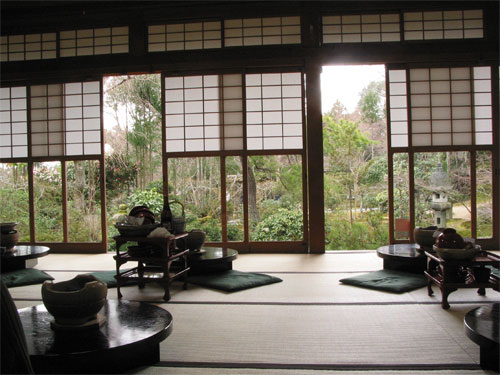
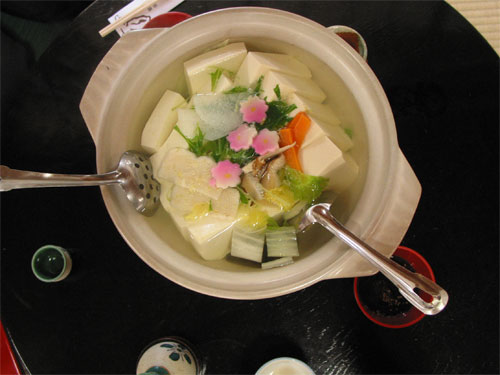
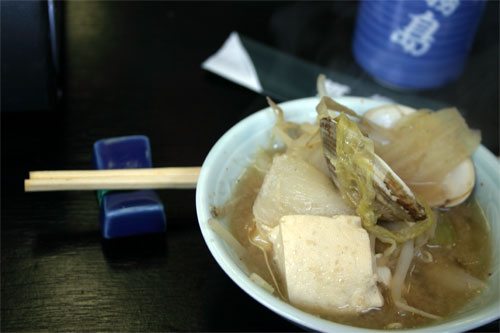
    I’ve had three exceptional meals in Japan. The first, and probably my favorite was in a little restaurant located on the grounds of Ryōan-ji, the famous temple with the rock garden. The restaurant is sitting in the middle of a gorgeous garden that is open only to the restaurant patrons. They serve beer and yudofu, a vegetarian stew with tofu and seven herbs.

    I am not a fan of vegetarian dishes, but this one completely blew me away by it’s simplicity and clean flavor. I can see how the monks could spend their entire life eating like that.

    You eat sitting down on tatami, the traditional way.

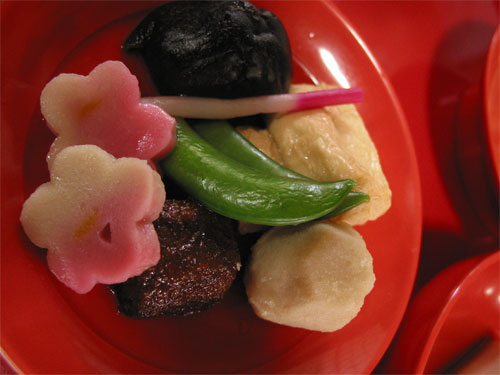
    We ordered a yudofu set that came with numerous side dishes, of which this is one. It wasn’t cheap at about $60, but was totally worth it. Maybe seeing the rock garden prior to eating this had something to do with it, but this was my favorite meal in Japan.

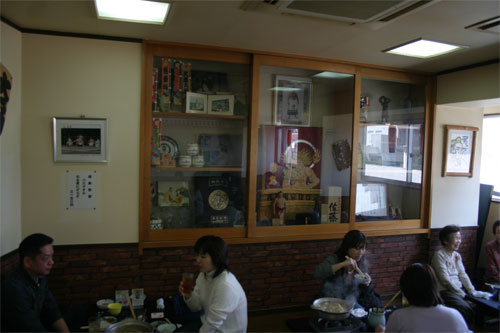
    My second favorite meal was in a little restaurant in Ryogoku, Tokyo’s sumo district. They serve chankonabe, stew traditionally eaten by sumo wrestlers. That was probably one of the most filling and healthiest meals that I’ve ever eaten in Japan – it was mostly protein.

    The restaurant was filled with trochees, memorabilia and pictures of sumo wrestlers, many in the restaurant itself and together with their families.

    Chankonabe is a meat, seafood and vegetable hot pot. It was prepared right in front of us.

    It’s eaten piping hot. I need to cook this at home more often.

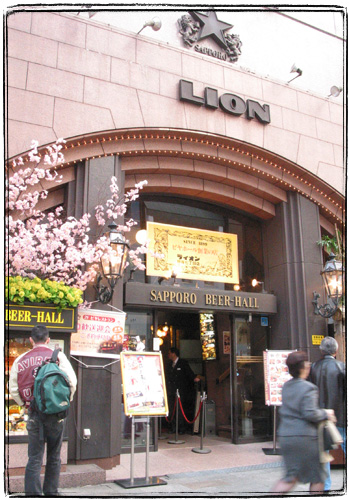
    Our last meal in Japan happened in a rather famous place, the Sapporo Lion Beer Hall in Ginza. It’s the oldest Japanese beer hall that opened its doors in 1899.

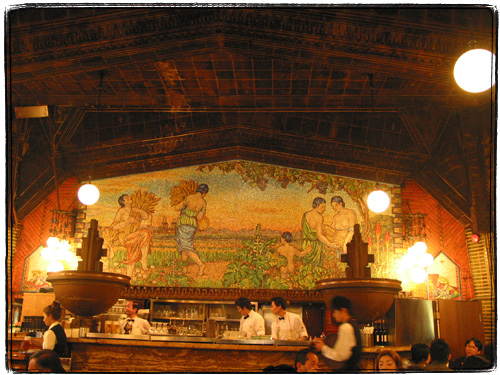
    The interior has huge vaulted ceilings, Art Deco and Gothic decor. There’s a huge mosaic over the bar depicting a harvest scene.

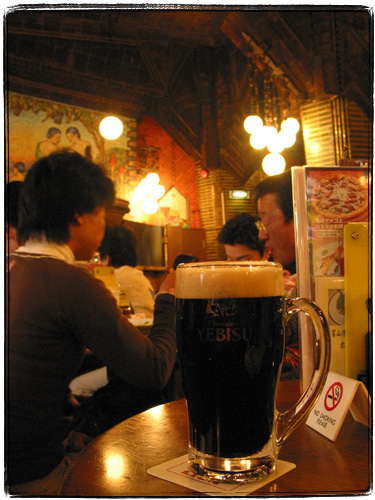
    The selection of beer is as good as can be expected in a place like this. My favorite was Yebisu Black, which I sadly can’t locate here in the US.

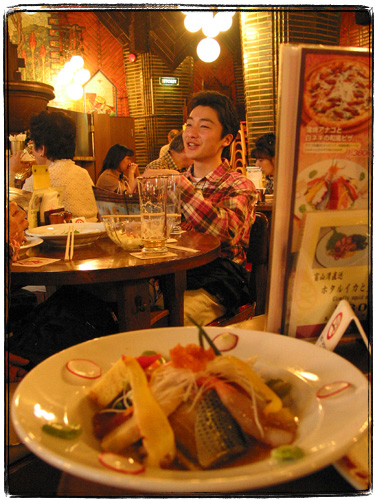
    The selection of appetizers was huge too, and we tried several, including this awesome sashimi appetizer. Sadly, despite my advice, my wife ordered a chorizo(!) appetizer (it was the only thing that I did not have that night) and got a bad case of upset stomach later that evening. I was fine, so I guess a historic Japanese beer hall is not a great place for chorizo.

  • Deadprogrammer Visits Japan Part VIa : Japanese Food

    You know that a have a japonophiliac streak in me, but I can’t honestly say that Japanese cuisine is my favorite. In fact it holds a shaky fourth position, after Vietnamese, Korean and Thai cuisines (in that order). Sushi, sashimi and kushiyaki (stuff on skewers) are great comfort food, and not many things achive the perfection of high quality sashimi (especially if I caught the fish) and fried smelt is probably one of my top 10 favorite foods. But overall, I think Japanese cuisine is all that great, but I still like it better than French and Italian.

    Let’s start at the base of Japanese food pyramid. The fast food. I am not going to get into details about Japanese McDonalds and the like. Calling it Macdonurado and making the clown hot and female does not change it much.

    Let’s start with the first meal that you might encounter – the bento, the boxed lunch. The sell these in most trains and train stations. The variety of bento is amazing, almost always reflecting the season and featuring fresh local produce. It’s probably the perfect and the best fast food in the world. Sadly, obentos are not popular in the US, which I think might change in the future. The thing that most resembles the bento, the tv dinner, is terrible and thankfully extinct.

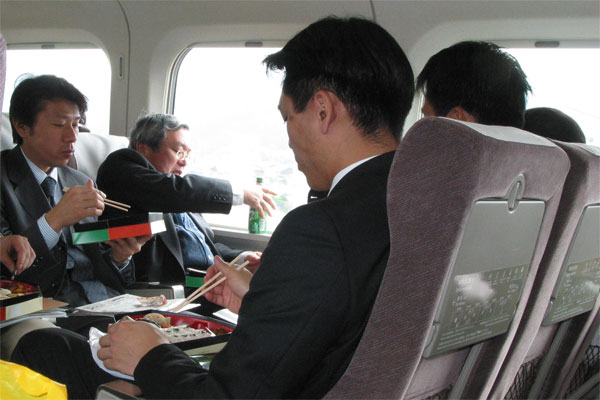
    Here’s a group of Japanese businessmen enjoying their bentos in a shinkansen. One of my favorite features of Mainichi Daily News is a special feature about bentos written by Shinobu Kobayashi. A bento usually cost about $10. My favorite part of bentos is the little exotic pickles, from lotus root to stuff I can’t even identify. They are like a little surprise – you never know how they’ll taste.

    A whole separate category should be devoted to festival junk food. Think the Japanese version of American county fair food.

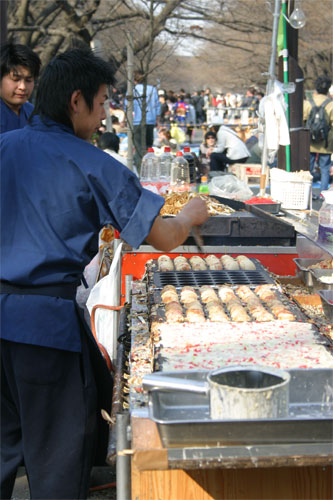
    First, there’s takoyaki, which should be familiar to all I Love Katamari players. Takoyaki are greasy balls of fried batter, filled with chunks of octopus and drenched in mayo, served searing hot. Unhealthy as hell, but great with beer.

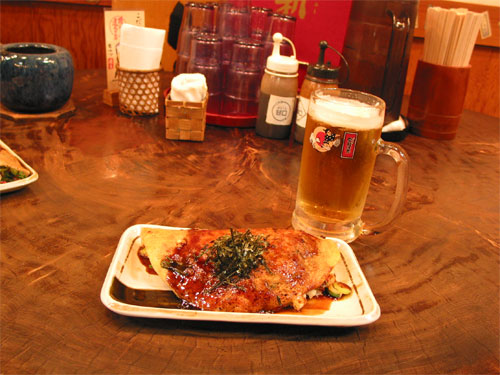
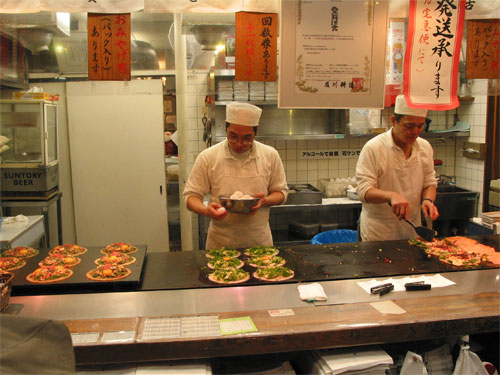
    Okonomiyaki is sort of Japanese take on pizza. They are also hot and greasy beyond belief, and again, a great drinking food.


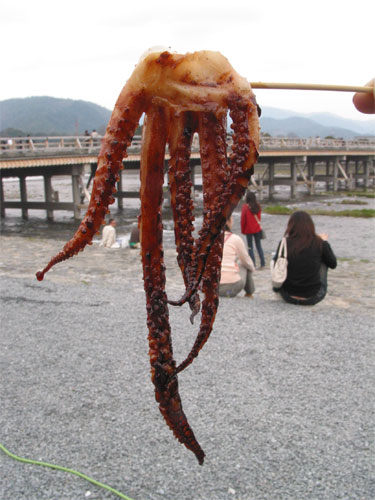
    Grilled squid on a stick is a popular festival food.

    Mitarashi dango are sticky rice flour dumplings on a stick. They are very filling, but not particularly tasty. I liked mochi a bit more.

    Fried foods are very popular in Japan, and the idea of deep frying was introduced by Portuguese missionaries. I always thought that it were the Dutch and the word “tempura” refered to “temperature,” but Wikipedia article tells me that it’s from “”ad tempora quadragesimae”, meaning “in the time of Lent””. In any case, tempura is only good when it’s made in front of you, and even then too greasy for my taste. I had a good tempura meal in a moderately expensive tempura place (it set me back something like $50) and I am still underwhelmed. Tempura here in New York is outright horrible.

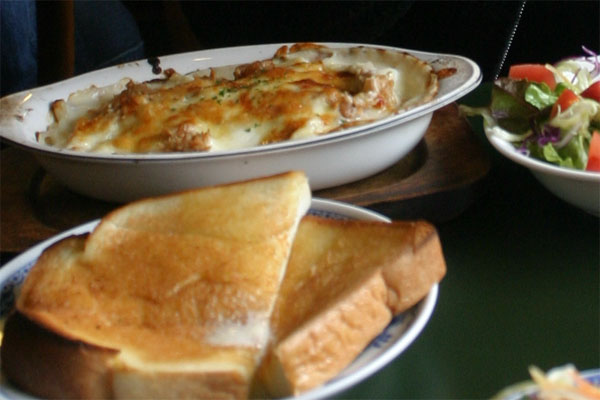
    Japanese cuisine is at its worst when it tries to emulate western food. There’s this class of meals called yoshoku, which means western-style japanese food, and it’s usually horrible. What it reminds me of the most is medieval artists trying to depict elephants and rhinos having for reference only pictures made by other medieval artists who also haven’t seen the real thing. Here’s an gratin of some sort that my wife had:

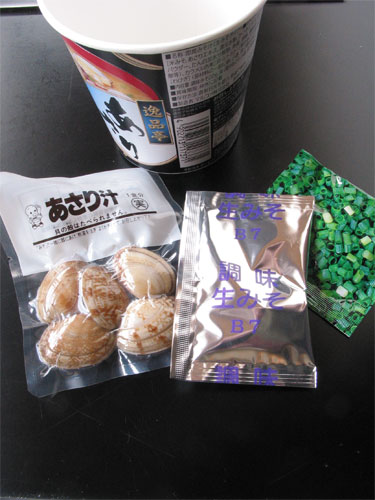
    The variety of convenience store food boggled my mind. Even the most basic student staples like ramen soup are exotic there: here’s one that has real clams in it’s fixin’ package:

    While junk food overlows and is dirt cheap, fruit and vegetables generally are very expensive. To make up for enormous prices, they are often local, hand picked, meticulously packaged (sometimes with an autographed photo of the farmer), and of great quality. Here’s a moderately cheap grocery store – those tiny little watermelons are $20 each.

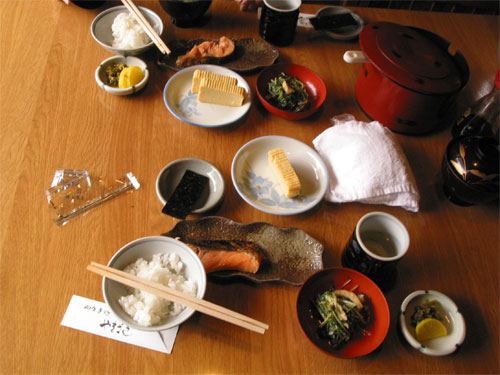
    For all the corruption of the west, traditional meals are great. I already covered the phenomenon of the “morning set” in a previous post, so here’s a photo of a traditional Japanese breakfast that I had in a ryokan. It consted of fried salmon, rice, miso soup, seeweed salad, pickles and interestingly shaped egg omlet.

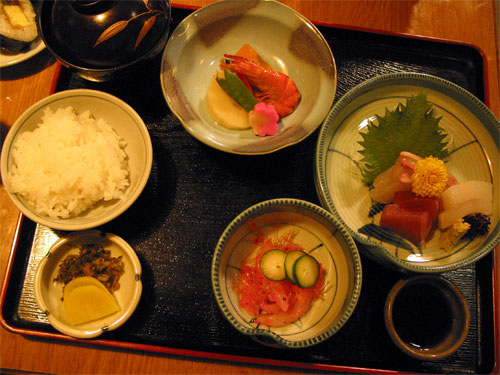
    Traditional dinner at ryokan was also great – sashimi, two kinds of seafood salad, pickled shrimp, miso soup, rice and sake. The little pink flower-like thingy is a slice of a special boiled fish cake (I think).

  • O’Reilly Book Covers

    Joel Spolsky wrote about an interesting limitation that he encountered when choosing a cover design for his book:

    “And although they would not put a doggie on the cover of my book as I requested, because a certain other book publisher threatens to sue his competitors when they put anything animal like within 90 feet of their covers, their graphic designer worked overtime to create underground cover art called “User Interface Design for Doggies” complete with three golden retrievers, which they framed and sent to me. All in all a classy operation and highly recommended if you’re thinking of writing a computer book.”

    The publisher is, of course, O’Reilly Media. The are famous for publishing computer programming books with engravings of animals on the covers. Like any programmer’s, my bookshelf holds a pretty sizable zoo of these critters. The question that always comes to mind is what guides the selection – how the publisher decides which animal to match with which technology. Here’s what O’Reilly editors say:

    “Our look is the result of reader comments, our own experimentation, and feedback from distribution channels. Distinctive covers complement our distinctive approach to technical topics, breathing personality and life into potentially dry subjects.”

    Well, with some books it’s clear – a spider for a webmaster book and a python for a Python book, for instance. But why does the Perl book have a camel? Wouldn’t an oyster make a lot more sense?

    Update: Joe Grossberg commented that camel was chosen “because Perl uses camelCase for capitalizing variables”. John (website or last name not included) said that “camel was picked for Perl because of the quip that it was a ‘horse designed by a committee’”. I like John’s version much better :)

    Joe also started a Wikipedia article on the subject.

    One of the more understandable conventions is using Javan animals on Java-related books. For instance, the Java book has a Javan tiger and the JavaScript book has a Javan rhino.

    O’Reilly colophons rarely give too much insight into why that particular animal was chosen for the cover, but sometimes you might read between the lines:

    “Like the crustaceans after which they are named, crab spiders walk sideways or backwards. They feed on bees and other pollenizing insects, often laying in wait for them by hiding on flowers.”

    “Both male and female pythons retain vestiges of their ancestral hind legs. The male python uses these vestiges, or spurs, when courting a female”

    “Folklore has long held that the horn of the rhinoceros possesses magical and aphrodisiacal powers, and that humans who gain possession of the horns will gain those powers, also.”

    “Tigers are the largest of all cats, weighing up to 660 pounds and with a body length of up to 9 feet. They are solitary animals, and, unlike lions, hunt alone.

    There are some tigers, however, who have developed a taste for human flesh. This is a particularly bad problem in an area of India and Bangladesh called the Sunderbans.”

    The ironic thing is, Javan tigers are extinct and there are only about 100 Javan rhinos remaining. Is that a dig at these languages?

    One of the most ironic, yet clearly unintentional choices was that of a stingray for the cover of ASP.NET in a Nutshell.

  • What Do I Know About What People Like?

    As you might have noticed, for all my ranting about redesigns, I went ahead and redesigned my own site. It took me all of 3 hours. I changed the template a bit, fixed a nasty WordPress search bug that inserted unsightly escape characters into search strings, changed all the urls for more search engine friendly ones (while preserving all the original ones) and made navigation arrows a bit more consistent. Fascinating stuff, isn’t it? This is all a part of my effort to finally get over the thousand reader mark on the Feedburner counter. It stands at 915 today (and I used that counter graphic as one of my Optimus Mini’s applets).

    I get a lot of Google and Google images traffic, as my humble blog is the second search result for “starbucks logo”. After reading my article about the Starbucks Melusine, most visitors just scamper away. I realized that I need some kind of a hook at the end of the page. I added the easy subscribe buttons, links to del.icio.us , Digg, Reddit and Netscape and a sampling of what I think are some of my better posts.

    What I think are my better posts are, probably is not what you, the readers, think. So, if I may be so bold, please tell me what posts do you think should make “Best of Deadprogrammer” list, as well, as which particular post made you subscribe to my rss feed (or to bookmark my site). Also, in an effort to overcome the 1K reader barrier, I will even stoop so low, as to ask all of you for a link, if you can spare one. The thousand reader barrier must be broken.

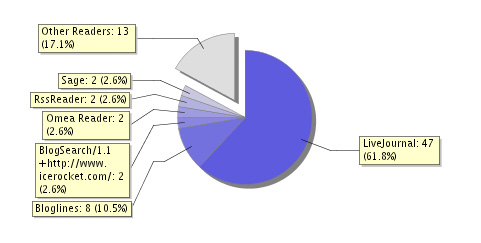
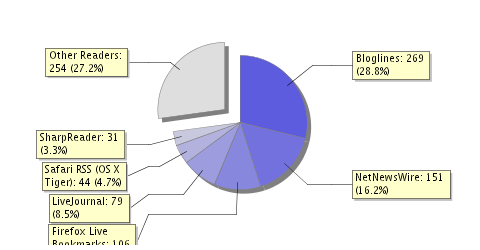
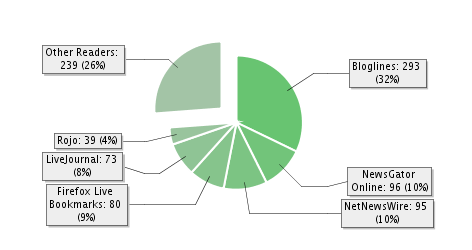
    Speaking of statistics, here’s a comparison of Feedburner’s breakdown. Since 2005 I went from 47 readers to 915. I am surprised to see a decrease in Livejournal readers since I quit it. Well, what can you do. I think I should give up my blog and move to Myspace. That’s where all the cool kids are and where most of my image traffic is coming from, even after I played a bit of a trick on them.


  • Ze Paul Frank

    In my career as a web development I’ve seen a lot of brilliant and competent people, as well as a lot of utter incompetents, on all levels of the corporate ladder and working at all levels of productivity. Basically, if I were to make a competence scale, it would look something like this:

    – <–10-9-8-7-6-4-5-4-3-2-1-0-1-2-3-4-5-6-7-8-9-10–> +

    Let’s say user data release by AOL would rate at negative 7; setting out to rewrite Netscape from scratch at negative 9; changing all the links of an established website in the name of SEO at negative 5; writing tons of spaghetti code that nevertheless functions and serves users at positive 1; coming up with PageRank algorithm and implementing it — at positive 10. There are also those who come into the office and do nothing at all – that’s 0. Ase we all seem to notice and remember negative things better than positive, sometimes corporate life seems like one big orgy of incompetence and bad ideas.

    I’ve long had a theory, why even with so many negative contributions, American companies mostly prosper and thrive, despite incompetency. To explain it, I usually use an ant metaphor. See, when ants are carrying a bug or a caterpillar back to the nest, they almost always succeed. But the thing is, they do not cooperate very well. They all have different ideas about which way to pull, and some, instead of helping, actually climb on the cargo or collide with other ants. Others just watch from the sidelines and generally mill about. But even though ants pull in different directions, the resulting force vector generally leads to the nest, and the caterpillar gets there eventually.

    Recently, an article about a designer Paul Frank caught my attention. He is fighting his former business partners who jettisoned him from the company bearing his name. He came up with the design ideas that made the company what it is, as well as lent it his name. The business partners accused him of not contributing to the daily business grind, bought out his shares and either fired him or drove him to resigning (depends on whose story you listen to). It’s getting nasty:

    ” “Those guys are saying Paul Frank is not a person,” says the designer, whose given name is Paul Frank Sunich. “I hear they’re all wearing T-shirts that say ‘We Are Paul Frank.’ Well, you’re Paul Frank Industries. You’re not Paul Frank.”

    I’ve seen the monkey design that Paul Frank is so famous for, but did not know that it was a multimillion dollar business. Apparently it’s very popular – and I definitely do believe that both the business partners that made this quirky brand into such a powerhouse and the guy who conceived it made positive contributions.

    What I have the issue with is the person who’s running their web department. It’s not even the unusable obnoxious flash-ridden websites that don’t work in Firefox. It’s the fact that this person apparently never did something very basic – typed in “Paul Frank” into Google. Because when you do, you get this as a first result:

    I don’t have a problem with the programmer who used a stock client detection script from somewhere. We all do that. But putting “Client Detection Script” as the title of the first page of your site is rather idiotic. And nobody at the company even searched for “Paul Frank” in Google, even if to see what other Paul Franks there are out there!

    Getting back to my ant theory, squabbles, badly designed websites and all those people who prolifically do bad things are balanced out by things done right. The website may suck, but the brand is so good that people will put up with it. Individual ants might be doing stupid and counterproductive things, but it all gets balanced out. The caterpillar gets dragged into the nest, whether it wants it or not.

  • Modernism, Postmodernism and the Voice of the People

    “It’s the combination of narcissism and nihilism that really defines postmodernism” Al Gore

    I am a man with huge gaps in education. Every time I think about all the history, philosophy and literature that I should be familiar with, I shudder. Take, for instance, Modern Library List of Best 20th-Century Novels. Out of the top 10 I olnly read numbers 4, 5 and 10.

    By the way, Modern Library editors did not understand the web enough to run a poll for a reader selected top list. Of course, the list came to include 4 Ayn Rand and three L. Ron Hubbard titles, with two top spots going to “Atlas Shrugged” and “The Fountainhead,” and third to “Battlefield Earth”. I am a bit surprised to see the Objectivists defeat the Scientologists, but I guess they’ve heard about the vote earlier and mobilized their forces ahead of time somehow.

    A similar “vote” happened on the TV Guide website once. The poll was run to determine the most annoying Star Trek character, and early on Ensign “Wussley” Crusher had a good lead on the competition. That was until Wussley’s alter ego, popular blogger Wil Wheaton, asked his readers to stuff the ballot box. Funnily enough, both wilwheaton.net and tvguide.com have the same PageRank of 7, so he had more than enough readers to rig the vote. I don’t remember who won and I can’t really look it up because in its recent redesign TV Guide broke most of the old urls (one of the reasons why its PageRank is so low).

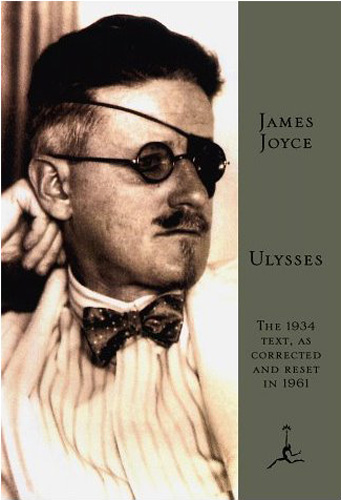
    Anyway, I really wanted to talk about the top Modern Library novel, Ulysses by James Joyce. I must have started this book 3 times, only to get stuck a couple of pages into it. I’ll have another go at it sometime, but I am afraid I am not smart enough yet to tackle it.

    One thing that leads me to believe that there might be a day when I’ll enjoy Ulysses is my growing appreciation of the Modernist movement. Even though the contents of the book elude my understanding at this moment, I really like the dustjacket created by E. McKnight Kauffer and book design by Ernst Reichl. Just because of the dustjacket design I paid $15 for this book many years ago, when I usually refused to pay more than a buck for a used book. The elegance of the form and color, the expressiveness of the simple type elements is lightyears beyond the current, and I guess what should be called “Postmodern,” cover.

    The funny thing is that “Modernism” is not modern at all. We are talking about books, architecture and music that is at least 50, and some times almost 100 years old. What comes after Modernism? Postmodernism. Honest to God, it looks like our society is running out of naming ideas. What do you name a language that comes after B? C. And then? C++. What comes after Generation X? Generation Y. Then? Generation Z.

    The latest poll is about Wesley Crusher.

  • Optimus Mini Three Full Review

    I once read a book called “The Mouse Driver Chronicles: The True-Life Adventures of Two First-Time Entrepreneurs” about two guys who started their own company with an unorthodox business plan: making a real, physical product and selling it. This happened during the dot com era, when everyone was making money hand over fist with immaterial products: websites, content, synergy and such. At the very most, bits and bytes would overlap with physical world in online stores – you could order something online and get it delivered, but there were very few companies that produced an actual product. Well, there was one place that would send a real dog turd to a recipient of your choice, but they went under and I can’t even find their website. “Brick and Mortar,” a metaphor for physical world (as opposed to online) stores became a pejorative.

    So, these two guys embarked on creating a company with a single product: a mouse that is shaped like golf driver and selling it to big novelty stores and catalogs. Very not dot-com. Designing the product was easy: take a golf driver head, slap mouse buttons on it – there it is. Dealing with the manufacturer was a lot more difficult. These days most of electronic products are made in China, and flying there is pretty expensive. You have to deal with the language barrier, timezone shift, and cultural differences, while collaborating on making a physical product. A single miscommunication and a whole batch worth tens of thousands of dollars might be ruined.

    This is the reason why so many great product ideas go unrealized. A great example of that is SiliconFilm: a film roll-sized device that would convert your regular SLR into a digital one. Many people would want to buy one, but it’s been a stady winner of Wired’s vaporware awards.

    Mousedriver was a simple product: a stock mouse in a slightly different housing. When I’ve heard that Art. Lebedev studio was actually planning to make one an OLED custom input device, Optimus Mini Three, I had my doubts that it would ever become real, but plunked down 100 bucks (a special pre-order price, it’s $160 or so now) and was prepared to get my money back in a year or two. Instead, in less than half a year I got a parcel from Taiwan. Inside was a working Optimus Mini keyboard. A was dumbstruck.

    Now, Art. Lebedev Studio is a slightly more serious outfit than the mousedriver guys. It’s a large (about 150 people) design firm lead by a brilliant designer Artemy Lebedev. This guy:


    Artemy (aka Tema aka Art.) Lebedev is so notorious in Russian web design scene, that he goes by the moniker “Youknowwho.” The Studio is based in Moscow, with satellite offices in Latvia and Ukraine. Web design is their bread and butter, but lately they’ve been branching out into industrial design. Starting with a funky coffee mug called ColorShift Atmark, they’ve been steadily building their portfolio of actually manufactured objects.

    There are only two other design companies that excite me as much, IDEO and Frog Design. Lebedev Studio in my mind is destined to be as great as IDEO. One day I found out that my favorite toothpaste tube(Crest Neat Squeeze) and toothbrush (the “fat” Oral-B one) were both designed by IDEO, as well as many other wonderful things. Good design is very important to me, and Art. Lebedev Studio is finally starting to come out with things that I can buy.

    The concept design for a keyboard with buttons containing little OLED screens called Optimus recieved a lot press coverage. Lebedev would be crazy to attempt manufacturing something complicated like that, just as it would have been stupid to attempt to create Apollo spacecraft without building a Redstone rocket first. So Youknowwho decided to do a proof of concept – a three button OLED “keyboard” and called it Optimus Mini Three. As I mentioned before, mine arrived from Taiwan a short time ago.

    I opened the box, plugged in the USB cable, installed the software and was up and running in about a minute. USB devices are supposed to be plug and play, but can be very finicky – refuse to be recognized, fail to install drivers, etc. Wasn’t the case with OM3 – the usb communication code is rock solid.

    One thing you should know about the organic led screens is that they are extremely hard to photograph. They behave kind of like the old tv screens and computer monitors, having some sort of a refresh scan. Ideally, I would take pictures in a professional light tent with a camera on a tripod taking a lot of pictures with a slow shutter speed. I ended up taking a lot of pictures hand holding the camera with the exposure of 1/13th of a second. My lens has an anti-shake feature and I have very steady hands, but the pictures could be a touch sharper if I used a tripod. There are also problems with moire pattern that shows up in pictures, but is of course not visible to the human eye.

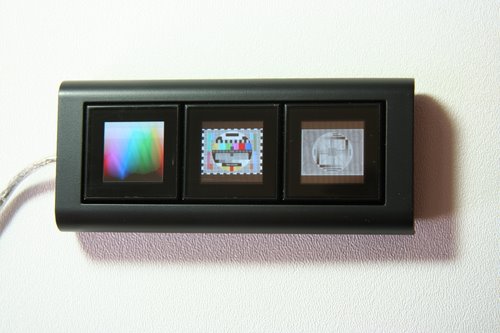
    Here I loaded some sample images from the web. They look very crisp live, but even with all the camera artifacts, they look passable photographed. The contrast and resolution is very impressive. Also, the plastic that covers the screens gives off very little glare and does not hold fingerprints well. The only thing that shows up is light-colored specks of dust. I did not even bother wiping down the buttons after pressing them for the most part.
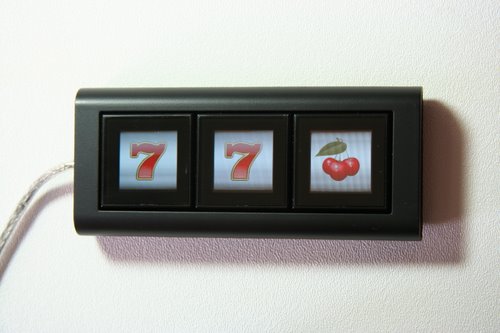
    Here’s an example of the silly slot machine game that comes with the software.
    Here’s a closeup of a single button. There is a bit of an issue with the pixels right at the top and bottom: they are a bit off.

    The memory and processor resource tracking application shows a \little artifact: a small stripe of dead pixels. This seems to be a software issue though: these pixels work in other applets and images, and actually show up in the software preview. In resource monitor mode the software itself takes about 10% of processor time for itself. This can probably improved, but this is not much more than I would expect from any resource monitoring application. Overall the “configurator” software is in a pretty solid beta. It does not crash, but certain features need some work: the Windows Media Player widget keeps scrolling “Winamp” messages, time and weather widget does not change the weather and is hard to read, etc.
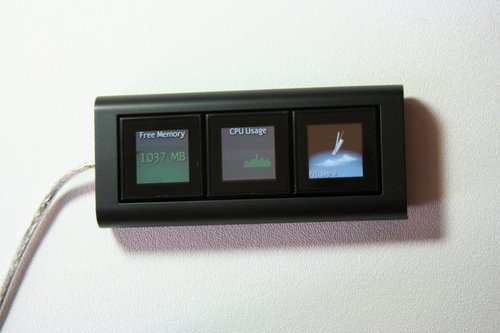
    I could not resist opening the this thing up. I pried up the non-skid rubber and found two screws. Mr. Lebedev has a habit of leaving funny notes in code comments of most of his websites. I was looking for a message, or the design team’s signature on the inside of the case (like with the original Apple Macintosh), but did not find anything.

    The keyboard is not completely silent – when in operation it generates a very faint buzzing sound and the buttons are slightly warm to the touch. I thought that there might a little fan inside, but did not find one.
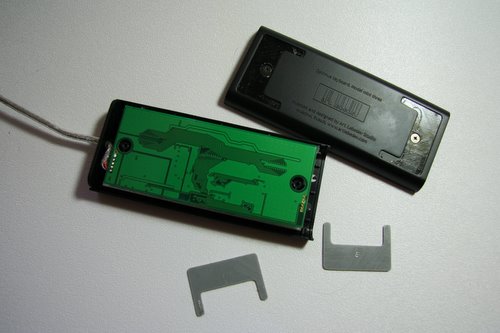
    The keyboard looks like it’s made out of metal, but it’s actually very high quality plastic. To make it more hefty, the designers used two strips of metal as wedges that hold the pcb in place.
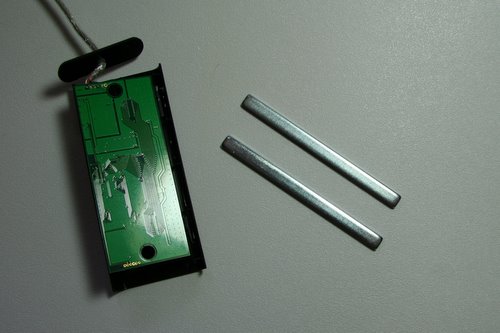
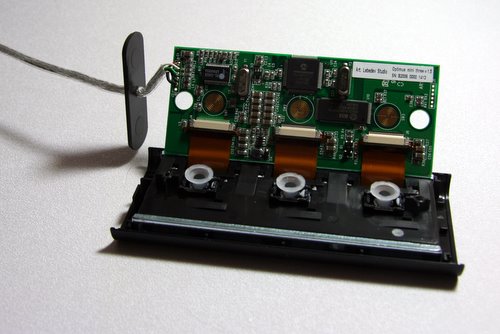
    I did not take apart the screen assembly, but unlike most electronic devices these days, the mini keyboard seems to have been designed with future service in mind. Replacing the screens is easily within the abilities of do-it-yourselfers. As you can see, the key mechanism is the soft, rather than clicky one. This is a matter of preference, of course, but a click, as a feedback mechanism would be nice.
    A lot of message board nerds cry – “unlike the full keyboard it’s useless!” The usefulness of mini three is in the software, of course. Even in it’s present state with one minute of spare time I came up with at least one cool use for it – a three webcam viewer. The picture is worse than the original, but the idea is that the left button shows Mount Fuji (at the moment under the veil of the night), the middle one – the Empire State Building and the right one – a live seahore webcam that lets me know what the weather is at my favorite fishing hole. I haven’t played with the SDK kit that is available yet, but it seems to be super nice. “What can I do with this?” – whine some on digg and reddit message boards. A hacker’s reaction would be different – “what can’t I do with this!”
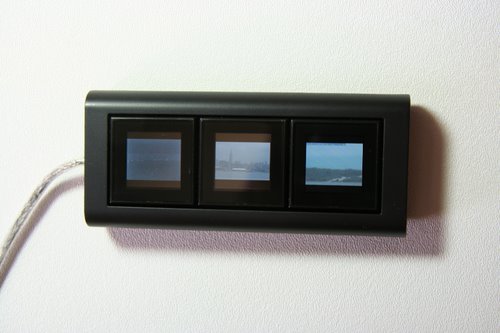
    160 bucks seems like a lot of money for a three button keyboard. I’ll admit, it’s not for everyone. The thing is, people spend a lot more on stupid case modifications and other blinkenlghts. And this well-designed gem of an accessory would be the coolest thing as far as the eye can see in your personal hell of a cubefarm. It’s a little hackable art piece. Practical? Not very. Cool? You bet your squeedly-spootch. Is it a good deal? Well, a much lamer lcd display goes for 80 bucks. A very neat laser keyboard goes for 180. Shiny is expensive.

    I have one gripe with the design. The keyboard is made so that it will lie flat. I’d like to have a little wedge, so I’d be able to see it at an angle (I think I’ll make one myself). What I do like, is that the screens are easily rotatable in software, so you can just lay it vertically.

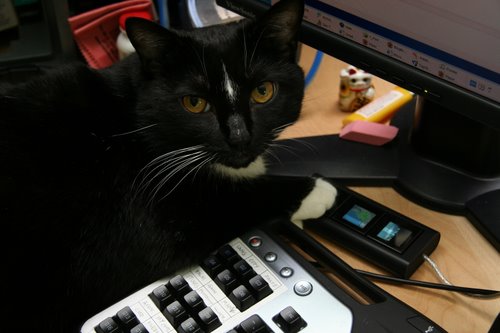
    Of course, it’s a bad idea to program Optimus Mini Three to trigger self destruct, as it’s not cat-proof. But I think I’ll program a cat toy sequence in it though. So far the plastic stood up very well to cat claws.
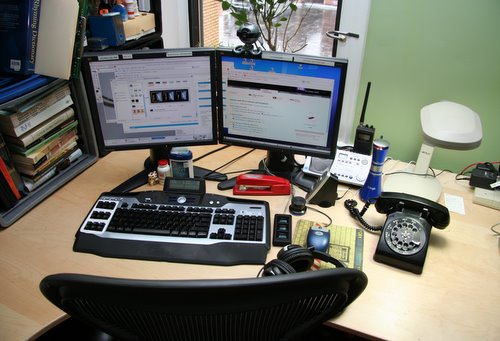
    For sticking with this lengthy and rambling post, I’ll let you take a little glimpse in my geeky life. Here’s a snapshot of a part of my table, including my fancy input accessories, for which, as you might have noticed, I have a bit of a weakness.

  • Murdoch Erotica

    In the tradition of The Sneeze, which runs “What May It Be“, I present my own version:

    Rupert Murdoch

    Before your fill my blog with indecent comments, I quickly present the answer: it’s Billionaire Tyrant’s upper bridge of the nose, as photographed by Platon for Wired Magazine article “His Space.”

    Rupert Murdoch

    Using harsh lighting that brings out every wrinkle is a cheap trick, Platon. I might just be jealous because nobody lets me take magazine cover photos, but if I did, I’d probably come up with something other than “face closeup”, “three quarter turn from below” and “sit your model down and take a picture from crotch level”.