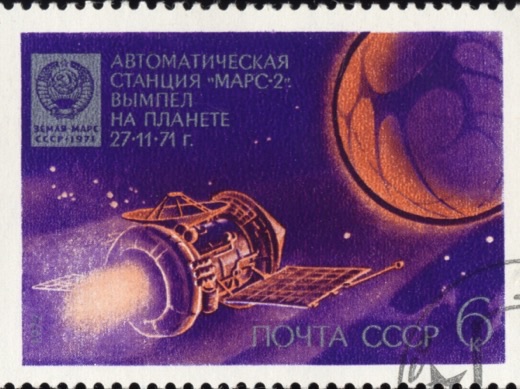

water swirling into a drain?
Blog
-
A galaxy eating wormhole or
-
Flower Shop at the End of Forever

Ok, maybe not at the end of forever, but definitely under the train overpass at Sheepshead Bay station.
These new led powered traffic lights are so damn bright (that’s what that red thing in the left corner is).
Oh, and of course, it rained like crazy. -
The Black Hole Of Publishing
Would you like to send a message into a black hole?
Just try writing a science fiction story and submit it to a magazine (not that I ever did, I know how horrible my writing skills are).
But just as Steven Hawking theorized that matter can “evaporate” from black holes, so answers can sometimes come back from sci-fi publishers. -
Shake and Bake
Q: What is measured in shakes?
A: Time. 1 shake = 10 nanoseconds.This unit of time was definitely created by Manhattan Project scientists, but why it was chosen is not 100% clear.
Theory # 1 – Too morbid
source
A shake is only 10 nanoseconds in time and arises from the theory of the chain reaction where one free neutron causes a fission that creates 2.5 to 3 new neutrons like a huge pyramid scheme and by the time the last layers of fissions occur they produce enough energy to “shake” the earth severely.
Theory # 2 – Too dry
source
I like the term “shake” – 10 nanoseconds. I think it’s roughly the time it
takes the average 1 Mev neutron to cover a distace of one mean free path (13 cm?) in fissile materials at maximum normal densities
Theory # 3 – Oralloy? Pu plasma? Shoo – way over my head.
source
a shake being roughly 10 ns – the time it takes neutrons in oralloy or Pu plasma to cover their Mean Free Path
Theory # 4 – Sounds just about right.
source
The ‘shake’ is a defined unit of time. Scientists working on the Manhattan project
(to build the first atomic bomb) found that the detonation cycle for the ‘device’
lasted 30 billionths of a second, or 30 nanoseconds. A shake was defined as
10 nanoseconds so the detonation cycle of the atomic bomb could be said to take
‘three shakes of a lamb’s tail.’
-
To boldly go where no meatball has gone before
My and my wife’s bathrobes look exactly the same. So I decided to put a patch on my robe’s sleeve to identify it.
First I was thinking about getting this one.
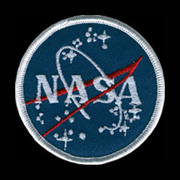
Then I changed my mind in favor of a simple NASA patch. That’s where I learned an interesting little fact. Turns out that there types of NASA insignia:the Meatball
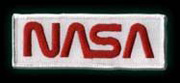
the Worm
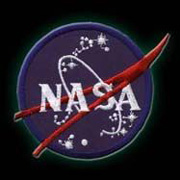
and the Vector
The following was taken from http://www.nasaproblems.com/
The NASA Worm vs. the MeatballNASA has had two insignias that it has used as its official logos. The first insignia dates back to 1959 when NASA was first originated. The round circle with blue background, stars, planet and airfoils was a nightmare design to print. Many referred to this insignia as the “meatball”. In 1975, NASA decided a more modern logo was in order and switched to an insignia now known as the “worm”. It was a red, stylized rendering of the letters N-A-S-A and it has never been very popular with the employees. I remember, just after the worm logo was introduced, attending employees “all hands” meeting with the NASA-JSC Center Director. During the question and answer period, one employee asked if NASA could reverse their decision to replace meatball logo. The Center Director said the new logo was a “done deal.”
In 1992, Administrator Dan Goldin brought NASA’s meatball back from retirement to invoke memories of NASA’s glory days and to show that “the magic is back at NASA.”. Nevertheless, nostalgia has its price. Since 1975 the worm logo had been carved in stone and cast in bronze on NASA buildings and entrance signs. It adorns the Hubble spacecraft in space. There are many thousands of places and documents that still have the worm logo. In the June 7, 1999 Centers Directors and Headquarters staff meeting it was reported that, “He (Mr. Goldin) is frustrated that the phase-out and conversion process is not yet complete, as it has been 7 years since he directed the reinstatement of the NASA “meatball” insignia.”


