Month: October 2008

  • Burying the Lead

    Every time I reread my blog posts, the same thought comes to my mind – “man, I buried the lead again”.

    I learned about leads from “Made to Stick: Why Some Ideas Survive and Others Die” by Chip and Dan Heath. It is a short book, but one that influenced me deeply. Every blogger out there should read it.

    Burying a lead“, in the jargon of journalists means boring the reader before getting to the juicy part. A “lead” or “lede” is the first sentence of the story.

    In the book, there’s an anecdote about a journalism teacher giving his students an assignment:

    ” … They would write the lead of a newspaper story. The teacher reeled off the facts: “Kenneth L. Peters, the principal of Beverly Hills High School, announced today that the entire school faculty will travel to Sacramento next Thursday for a colloquium in new teaching methods. Amnong the speakers will be anthropologist Margaret Mead, college president Dr. Robert Maynard Hutchins, and California governor Edmund ‘Pat’ Brown. ”

    Apparently, most students produced a lead that lumped all these facts into a single sentence. The teacher read all the submissions and then announced:

    “The lead to the story is ‘There will be no school next Thursday’ ”

    I am having a huge problem with writing in “inverted pyramid” style. The juicy parts of my posts are usually at the bottom.

    Think about it, most blog readers, especially the ones that matter suffer from add, and often do not get to the bottom of the article. This means they won’t link to it, won’t digg it.

    I am trying to improve, but writing is a difficult art to master. I just wish I took more writing classes.
  • Best Nickname Ever

    When I was in school, I always considered History to be one of the easiest subjects, and also one of the most boring ones. Most teachers that I had concentrated on having us memorize facts and dates, and did not really try to make History interesting. I did have a couple of good History teachers in college, one of whom won a Pulitzer prize. Another made me regret not having the time to get a proper classical education.

    In any case, the biggest problem I have with history books is that everything in them is sanitized. I like my historical works HBO-style, with all the filth intact, like in Deadwood and Rome.

    Let me give you an example. I was reading “The Tolstoys: Twenty Four Generations of Russian History” by Nikolai Tolstoy-Miloslavsky. The Tolstoy family were always very important in Russian history. They seem to possess some talents that seem to be passed on genetically. These talents seem to fall into three categories: writing, politics, and to the lesser extent art. From founding the fist Russian secret police, through writing dozens of world-changing books, to revolutionizing Russian web design, Tolstoys left a deep mark. By reading this book I understood how much this one family line changed Russia and the world.

    But what I found the most enjoyable was not that, but a little episode about Ilya Miloslavskiy, the book author’s illustrious ancestor. Boyar Miloslavskiy was sort of an olde tyme oligarch. In 1600s he headed all of Russia’s most important (and profitable) ministries, Military, Medical, Treasury, etc. He was a man of limitless appetites, and stole amazing amount of money. Miloslavsky’s boss, tzar Alexei was not bothered as much by stealing, as he was by amoral behavior.

    Tolstoy quotes Dr. Collins, a royal physician and apparently Miloslavsky’s employee:

    “at last perceiving Eliah too kind to some of his Tartar and Polish slaves, he urged him (being and old Widdower) either to marry or refrain the Court. For the Russians highly extoll marriage, partly to people their Territories, and partly to prevent Sodomy and Buggery, to which they are naturally inclined, nor is it punished there with Death. A lusty Fellow about eight years since being at this beastly sport with a Cow, cry’d to one that saw him ‘Ne Mishchay, do not interrupt me; and now he is known by no other name over all Muscovy, than ‘Ne Mishchay’ “.

  • Two Elephants

    While I visited Odessa, I had dinner at a restaurant called “Captain Morgan”. It had my first taste of absinthe there (at the time you could not buy absinthe in the US), they had wi-fi, and their take on Vietnamese salad was almost passable.

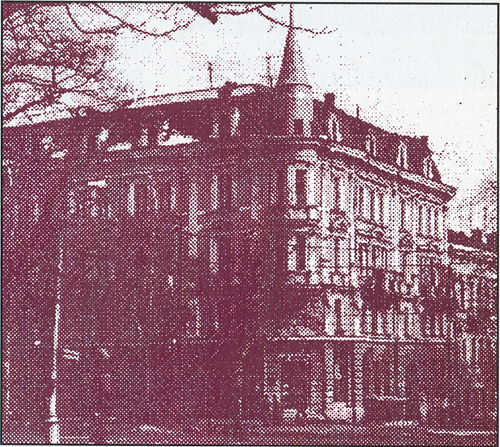
    The address of the building where “Captain Morgan” is located now is Resihlyevskaya street 17. Named after Odessa’s first and most beloved governor, Duc de Richelieu, it was always one of the oldest and most prestigious streets, sort of Odessa’s Madison avenue. (Pushkin street is 5th ave, Deribasovskaya – Broadway.) During Soviet times Resihlyevskaya was renamed into Lenin street, now the old name is back.

    There were two things for which 17 Lenin street was famous. First of all, it was Isaac Babel’s childhood home. Secondly, it housed a large bookstore unimaginatively called “Technical Book Store.” On the other hand everybody called it “Two Elephants”, which was a bit of a mystery, since there were no elephants to be found there, only a very large selection of technical books and a top-notch stationery section.

    The name came from the fact that before a renovation that happened sometime in the 60s, there were two giant life size papier-mache elephants reaching to the top of the ceiling in the store. Before the revolution it was a high end toy store.

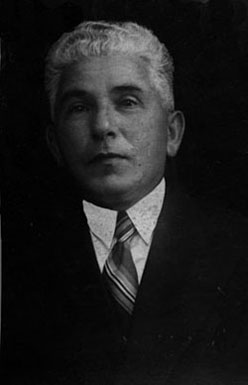
    I recently learned that it used to belong to my great grandfater, Moses Zayderbit. He had enough sense to voluntarily hand the store over to the Bolsheviks, and even managed to get a job there.

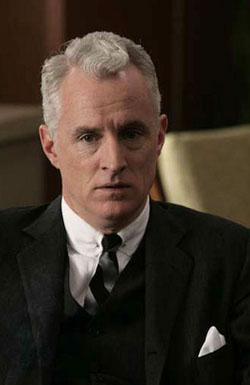
    While my other great-grandfather looked a bit like Seth Bullock, great-grandpa Moses looked a little bit like Roger Sterling from Mad Men:

    So, last year I was drinking absinthe and checking email in what used to be my great-grandfather’s toy store without knowing it.

  • Amazon Ads in RSS Feeds

    A while back I’ve added an advertising module to my site that allows me to inject amazon item ads both into the site content and into the rss feeds. I hand pick the items, which most of the time fall into one of the three categories: stuff that I would probably want myself, stuff that I already have, stuff that I mentioned in the post, and stuff that is just funny. Four categories.

    This is not “punch the monkey”, not the same one ad that some bloggers stuff into their rss feeds and keep there forever until you are sick of it. From time to time the amazon items are really funny.

    On the other hand, at my level of readers, the princely 6% commission that I get on Amazon purchases that come through the site, it’s not really a major financial incentive. The ads do cover my hosting expenses, but I do kinda feel guilty of thrusting the ads on my readers.

    So, tell me, what do you think about the ads? Should I just junk them? I already replaced some of the ads on the site with links and ads for products that I simply like, without getting any payment, just as a way to say “thank you” to the people who make these products. I might do the same thing with the rest of the ads.

  • Imaginative Inventions: The Who, What, Where, When, and Why of Roller Skates, Potato Chips, Marbles, and Pie (and More!)

    Have you ever wondered how chewing gum was invented? Or who made the first roller skates? Or why there are piggy banks rather than doggy banks? Imaginative Inventions answers all of these questions and tells the fascinating stories behind these, as well as potato chips, eyeglasses, doughnuts, high-heeled shoes, the wheelbarrow, marbles, the vacuum cleaner, animal crackers, and more. Written in verse and with illustrations full of offbeat characters and quirky details, this book invites young readers inside the minds of great inventors and encourages them to think imaginatively.

  • Don’t Mock The Victorians

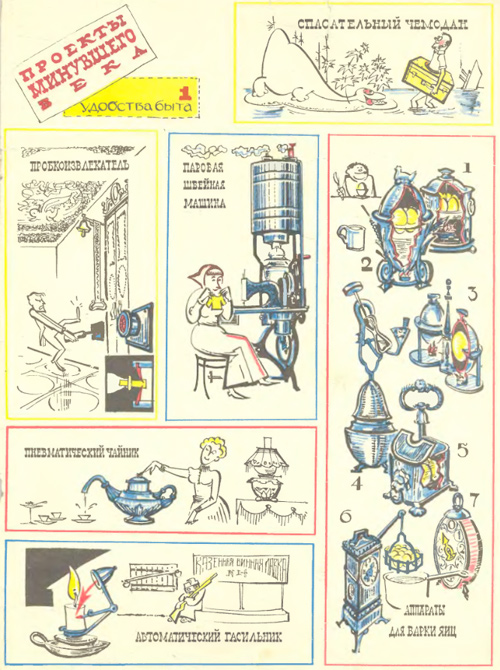
    I’ve been leafing through some old Soviet science and technology magazines, and came upon this cartoon mocking inventors of the yesteryear. There’s a trunk-lifesaver, steam-powered sewing machine, a built-in bottle opener, an automatic candle extinguisher, a variety of ridiculous looking egg cookers, and … a pneumatic tea kettle, which in one shape or another can be found in just about any coffee shop, catering hall and cafeteria these days.

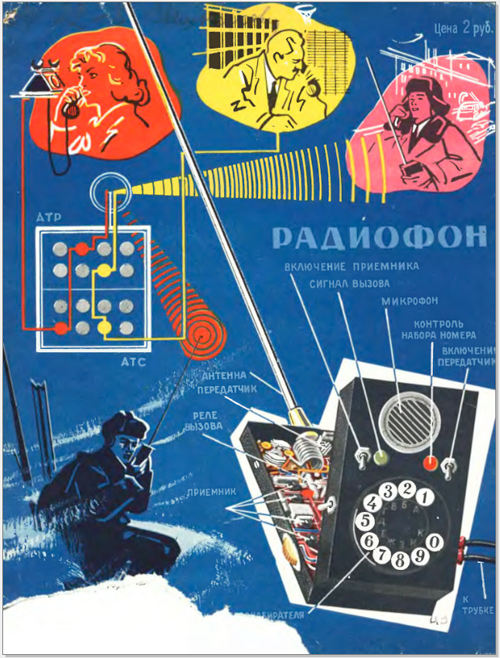
    Also in the mix – what they imagined a cell phone would be like in the 70s.

  • Link Love 1

    Stack Overflow: What do programmers listen to when they write code?

    The best note taking tool in the world, Evernote, finally released an API. I really, really love Evernote.

    Jesse Reklaw has a new Slow Wave book, The Night of Your Life, out. You can get signed copies from Slow Wave website or buy them at Amazon. Slow Wave is in the top 5 of my favorite comics, and Jesse drew the cat and programmer graphic used in the masthead of my site.

    For some reason, my former co-worker Sean posts more New York City photos than I do these days.